
By Mohammed TAFRAOUTI
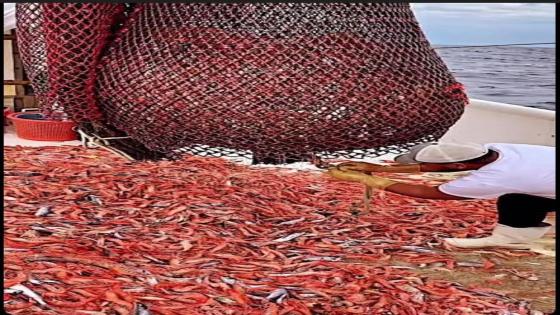
For centuries, the deep sea remained largely beyond the reach of human exploitation, however as fishing technology advanced, fleets increasingly expanded into deeper waters. In the Mediterranean, deep-sea fisheries are driven primarily by the commercial value of deep-water red shrimp, with fishing activity concentrated along the continental slope at depths of approximately 500 to 800 metres, where catches remain economically viable.
Recognising the vulnerability of deep-sea ecosystems as far back as 2005, the General Fisheries Commission for the Mediterranean (GFCM) adopted a ban on bottom trawling beyond 1,000 metres, prohibiting the use of dredges and bottom trawls below that depth throughout the Mediterranean and Black Seas. At the time, the 1,000-metre threshold broadly reflected the operational limits of fleets targeting deep-water shrimp.
The world has changed since 2005 as today growing scientific evidence suggests that vulnerable deep-sea habitats extend well above the current limit. Today, conservation organisations and marine scientists argue that the existing threshold of 1000 m needs to be revised to 800m, prompting calls at the GFCM for stronger protections and a precautionary extension of the ban to shallower depths.
Now faced with a critical choice, the member states of the GFCM can either strengthen protection for some of the region’s last relatively undisturbed marine ecosystems or risk further degradation of habitats that may take centuries to recover, simply to allow a few hundred vessels to continue fishing at these depths. For the countries of the southern Mediterranean in particular, adopting a precautionary approach to deep-sea conservation, such as that recently adopted by Egypt in late 2025, will be essential to balancing ecological protection with the long-term sustainability of marine resources.
The debate currently taking place within the GFCM in 2026 is not simply about a depth limit or a few hundred metres here or there. Rather, it exposes competing visions for the future of our shared Mediterranean Sea. Can we really afford to keep treating marine ecosystems as resources to be exploited until exhaustion for the benefit of a limited number of companies and vessels?
Down below, in the cold darkness of the deep seabed, even the passage of a few trawlers can alter ecosystems that have taken centuries to develop. Bottom trawling can devastate fragile habitats shaped over geological timescales, leaving scars that may persist for generations. Equipped with powerful engines often ranging from 500 to more than 1,000 horsepower, heavy trawl gear, and sophisticated sonar and seabed-mapping technologies, these vessels form a fleet historically concentrated in Mazara del Vallo, Italy, but also operating in parts of Spain, particularly Catalonia, as well as in Greece and, since the 2000s, in Turkey.
800 Meters: A Scientific Threshold, Not a Luxury
As NGOs and scientists argue it should be lowered to 800 meters in order to better protect vulnerable marine ecosystems and already fragile deep-sea stocks, such as shrimp, in reality, only a very small fraction of the Mediterranean fleet, around 4 to 5%, or approximately 400 vessels out of more than 8,700 registered trawlers, has the technical capacity to operate at depths close to 1,000 meters. An even smaller number actually do so regularly. This fleet is unevenly distributed, dominated by Italy, followed by Spain, Greece, and Turkey, while other countries such as Algeria account for only marginal shares.
From this observation arises the scientists’ urgent call: lower the ban threshold to at least 800 meters. This is not a mere technical dispute, but a struggle over the future of the sea itself. Such a measure would protect more than 100,000 square kilometers of deep-sea ecosystems, reduce overlap between fishing zones and vulnerable habitats, and preserve the role of the deep sea as a climate sanctuary and carbon sink. More importantly, empirical studies conducted in seven Mediterranean countries (including Egypt, Tunisia, France, Italy, and Spain) confirm that the economic impact on fishers would remain marginal. Some scientific reports even recommend a further reduction to 600 meters in the most fragile areas, particularly those hosting extremely slow-regenerating habitats such as cold-water corals and deep-sea sponges.
The Voice of Divers: A Testimony from the Depths
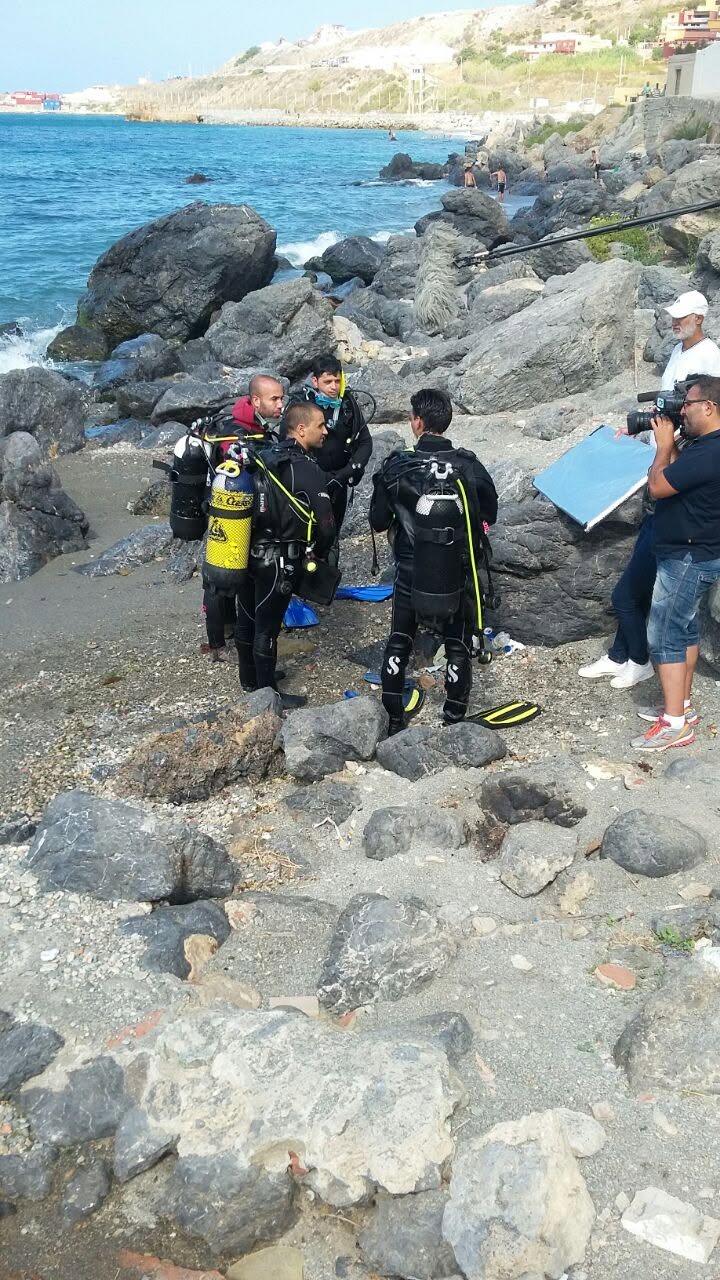
Mr. Younes El Baghdidi, president of the Fnideq Champions Association for Underwater Hunting and Environmental Protection, states that bottom trawling causes irreversible damage to biodiversity-rich marine habitats. By destroying the seabed, it devastates sensitive environments that require many years to recover. He emphasizes that divers and field practitioners witness daily the growing pressure on marine ecosystems, whether from overfishing, plastic pollution, or the degradation of key habitats such as coral reefs and seagrass meadows. He stresses that preserving this heritage requires a real transition: from overexploitation to sustainability, through stronger environmental monitoring, support for scientific research, and the involvement of coastal communities in effective participatory governance. Marine Protected Areas (MPAs) must also be expanded and laws strictly enforced, as maintaining the status quo will lead to irreversible loss. The ocean, he recalls, is not only a source of livelihood but a living system that requires urgent collective protection before it is too late.
“In the field, as a diver, I do not see the sea as a simple blue surface, but as a living, breathing space that reveals its secrets with every dive. When I descend into the depths, I witness firsthand how certain habitats become disaster zones after the passage of bottom trawlers. Coral reefs lose their vibrant colors and turn into dull structures; fish that once moved in harmony disappear, leaving behind an oppressive void that reflects the silent violence of this destruction. It is there, in the silence of the deep, that one realizes the sea is not a resource to be exhausted. It is an interconnected life system where even the smallest disruption threatens the entire ecological balance, causing irreplaceable loss.”

Science Moves Forward… Politics Hesitates
In regional expert meetings, a positive momentum has emerged in favour of adopting the 800-meter threshold, supported by several states. However, political decision-making remains below expectations. Here lies the traditional gap: science provides evidence, while politics weighs costs and corporate pressures. Among supportive positions, some southern Mediterranean countries also express adherence to this precautionary approach. Feras ELAGABRI indicated that Libya supports and encourages stronger environmental restrictions on marine fishing in order to protect sensitive ecosystems. In this context, Tripoli favors extending the deep-sea trawling ban from 1,000 to 800 meters, in line with its strategy for preserving marine resources. This orientation is also consistent with Libyan Law No. 14 of 1989 on maritime fishing, which already includes technical conservation measures, notably a minimum mesh size of 4 centimeters to limit juvenile catch.
In contrast, environmental advocates note that the North-East Atlantic has applied a similar ban since 2017, placing the Mediterranean face to face with its own “regulatory delay.” This gap highlights a maritime governance framework where scientific considerations are entangled with economic and political arbitration in a complex negotiation space between states and productive sectors.
United Nations Ocean Summit in Nice: When Discourse Collides with Reality
At the Ocean Summit in Nice, the French President announced his intention to restrict bottom trawling in certain Marine Protected Areas. Activists and environmental organizations reacted strongly, describing these measures as partial and noting that large portions of these zones remain open to destructive fishing. This illustrates the tension between environmental rhetoric and concrete action: protection is sometimes reduced to an administrative label stripped of ecological substance, weakening political credibility. This controversy is not merely a dispute over intentions; it is a symptom of a crisis of trust. When states declare “protected areas” without banning the most destructive activities within them, protection becomes an empty slogan and environmental policy loses operational meaning.
The Mediterranean Depths: Reservoirs of Life and Carbon
At depths of several hundred meters and beyond, a completely different world exists: deep-sea sharks, slow-growing corals, and marine organisms whose life cycles span decades or even centuries. These ecosystems, among the most vulnerable on the planet, now face the risk of being destroyed “in a single stroke” of a bottom trawl. Moreover, when sediments are disturbed, stored carbon is released, undermining the ocean’s role as a climate regulator. Protecting the deep sea therefore becomes both an environmental and climate emergency. Deep waters are not merely habitats for marine life; they are natural carbon sinks that help maintain the global climate balance. Under continuous fishing pressure, this vital function is being eroded, turning the ocean from a climate ally into an additional source of stress.
The Mediterranean Can No Longer Wait
The Mediterranean is one of the most fragile and rapidly warming seas in the world. Delay is not a neutral option; it means maintaining pressure on slow-regenerating ecosystems. What is needed today are concrete and measurable conservation decisions, starting with the adoption of the 800-meter threshold as a first step, with an extension to 600 meters in the most sensitive areas. It is also essential to transform “protected areas” into genuinely protected spaces by fully banning bottom trawling, while establishing a spatial footprint for trawler fleets to prevent expansion into deeper waters. Finally, fisheries policy must be aligned with climate objectives, because protecting the seabed means safeguarding stored carbon. Moreover, integrating the social dimension is essential to ensure environmental policies do not become an unfair burden on coastal communities. Small-scale and artisanal fisheries must be part of the solution through regional programs that support local livelihoods and ensure that protection does not become exclusion.
Between Science and Politics: A Battle of Narratives
While the European Union has not formally proposed an 800-meter ban, it has supported within the GFCM a strengthening of deep-sea ecosystem protection measures, in a context where scientists and NGOs are calling for a reduction of the current 1,000-meter threshold.
The global environmental discourse is facing a crisis of credibility. While summits and conferences multiply, conditions on the seabed remain unchanged. Credibility is measured by what is actually prohibited, not what is proclaimed. This is where the future of the Mediterranean is decided: will it remain an extractive space down to its last meter, or become a shared natural capital central to global climate and food security? The credibility of commitments to ocean protection will ultimately be judged not by declarations made at international summits, but by the measures implemented beneath the surface.